

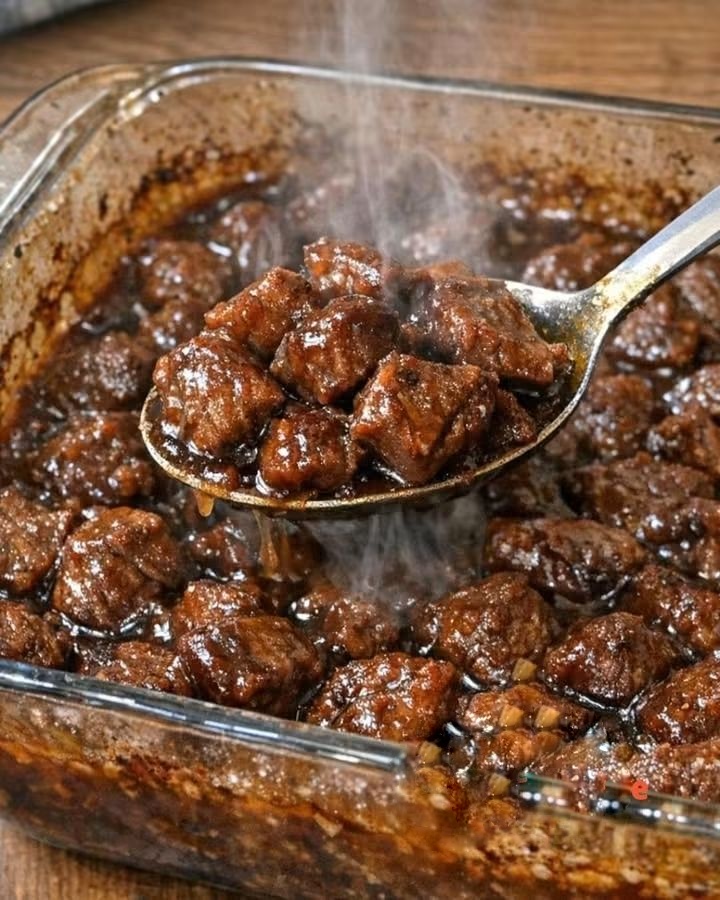
Oven-Baked 3-Ingredient Beef Wentworth: An Old-Fashioned Comfort Food Favorite
Introduction
There is something truly special about old-fashioned recipes that turn a handful of simple ingredients into a dish everyone wants to gather around. This Oven-Baked 3-Ingredient Beef Wentworth is a wonderful example of traditional comfort food, bringing together tender pieces of beef, savory French onion soup, and sweet brown sugar to create a rich, glossy sauce with a delicious balance of sweet and savory flavors.
Perfect for family gatherings, holiday celebrations, autumn potlucks, game-day parties, and cozy Sunday dinners, this easy beef recipe requires very little preparation. Instead of spending hours browning meat or preparing a complicated sauce, you simply arrange the beef in a casserole dish, add the two remaining ingredients, cover, and let the oven do most of the work.
As the beef slowly bakes, the condensed French onion soup provides a deep, savory onion flavor, while the brown sugar adds sweetness and helps create a rich-tasting glaze. The covered baking method helps retain moisture, allowing the beef to become tender while the flavors blend together.
One of the best things about this recipe is its versatility. Serve the beef bites with toothpicks as a warm appetizer, spoon them over fluffy white rice for a satisfying dinner, or serve them alongside mashed potatoes, egg noodles, or warm dinner rolls. No matter how you serve it, this simple dish offers the kind of hearty flavor that makes people return for another helping.
If you love easy recipes made with everyday ingredients, this Oven-Baked 3-Ingredient Beef Wentworth deserves a place in your collection. It is practical, comforting, and especially convenient when you need something flavorful without spending the entire afternoon in the kitchen.
Recipe Overview
- Recipe Name: Oven-Baked 3-Ingredient Beef Wentworth
- Preparation Time: 10 minutes
- Cooking Time: Approximately 1 hour 30 minutes
- Total Time: Approximately 1 hour 40 minutes
- Servings: 8 appetizer portions
- Cooking Method: Oven baking
- Difficulty: Easy
- Main Ingredient: Beef stew meat
- Flavor Profile: Savory, sweet, rich, and comforting
- Best For: Family dinners, potlucks, parties, and casual entertaining
Ingredients
This recipe uses only three main ingredients, making it an excellent choice for anyone who appreciates uncomplicated cooking. Each ingredient contributes an important part of the final flavor.
1. Beef Stew Meat
Quantity: 2 pounds beef stew meat, cut into bite-size pieces.
Beef stew meat is ideal for this recipe because it is generally made from flavorful cuts that benefit from slow, moist cooking. As the meat bakes under the foil, the connective tissue in suitable cuts gradually softens, helping produce tender, satisfying beef bites.
Choose pieces that are reasonably uniform in size so they cook more evenly. If the butcher has cut the pieces particularly large, trim them into smaller portions before placing them in the casserole dish.
2. Condensed French Onion Soup
Quantity: 1 can (10.5 ounces) condensed French onion soup.
The condensed soup provides the savory foundation for the sauce. Its onion flavor complements the natural richness of the beef, while its concentrated consistency helps create a flavorful cooking liquid.
Because canned soups can contain considerable sodium, consider choosing a lower-sodium variety if desired. Check the label to make sure the product is condensed French onion soup rather than a ready-to-serve soup with a different liquid concentration.
3. Brown Sugar
Quantity: 1 cup packed brown sugar.
Brown sugar brings sweetness and a subtle molasses flavor that balances the savory onion soup. During baking, it dissolves into the cooking liquid and contributes to the rich, glossy appearance of the finished sauce.
Pack the brown sugar firmly into the measuring cup to obtain the intended quantity. If you prefer a less-sweet result, you can experiment with using less sugar, although this changes the original three-ingredient recipe.
Kitchen Equipment Needed
- A medium oven-safe glass casserole dish or appropriately sized baking dish.
- Aluminum foil for covering the dish.
- A measuring cup.
- A spoon for distributing the ingredients.
- A fork for checking the tenderness of the beef.
- A food thermometer for checking safe cooking temperatures.
Choose a baking dish that holds the beef in a relatively even layer without excessive crowding. The dish should also be deep enough to contain the cooking liquid and sauce.
Instructions: How to Make Oven-Baked Beef Wentworth
Step 1: Preheat the Oven
Preheat your oven to 325°F (163°C). Lightly grease a medium oven-safe casserole dish if needed to make serving and cleanup easier.
Allow the oven to reach the desired temperature before placing the beef inside. Consistent heat helps the meat cook gradually and gives the ingredients time to develop their flavors.
Step 2: Prepare the Beef
Place the 2 pounds of bite-size beef stew meat in the prepared casserole dish. Spread the pieces into an even layer, keeping them as evenly distributed as possible.
If necessary, pat the beef dry with paper towels before arranging it in the dish. This is optional, but it can make the meat easier to handle.
There is no need to brown the beef first. Skipping that step keeps the recipe simple and reduces the number of dishes you need to wash.
Step 3: Add the French Onion Soup
Open the can of condensed French onion soup and spoon it evenly over the beef. Distribute the soup so that as much of the meat as possible is coated.
The soup will provide the savory liquid needed to help the beef cook in the covered casserole. As the meat releases its juices, those liquids will combine with the soup to form the sauce.
Step 4: Add the Brown Sugar
Sprinkle the packed brown sugar evenly over the soup and beef. Try to distribute it across the entire surface rather than leaving all the sugar in one area.
As the casserole heats, the sugar will gradually dissolve and blend with the savory onion mixture. This creates the characteristic sweet-and-savory flavor that makes the recipe appealing.
Do not add extra water automatically. The beef releases moisture as it cooks, and the condensed soup is intended to provide the starting liquid. If your particular dish appears unusually dry during cooking, assess it carefully before adding a small amount of water or unsalted beef broth.
Step 5: Cover the Casserole
Cover the baking dish tightly with aluminum foil. A secure cover helps trap steam and moisture, creating a moist cooking environment for the beef.
Make sure the foil is suitable for oven use and does not touch any heating element. Handle the dish carefully because hot steam can escape when the foil is removed.
Step 6: Bake Until Tender
Place the covered casserole in the preheated oven and bake for approximately 1 hour and 30 minutes. Stir the mixture carefully about halfway through the cooking time to redistribute the beef and sauce.
Cooking time can vary depending on the cut of beef, the size of the pieces, the shape of the dish, and your oven. Begin checking the beef toward the end of the estimated cooking time.
The meat should be fork-tender, and the sauce should be well combined. If the beef remains tough, cover the dish again and continue baking in 15- to 20-minute intervals until it reaches the desired tenderness.
Important food-safety note: Beef stew meat should be cooked to a safe temperature. For cuts intended to be tenderized through slow cooking, approximately 190–205°F (88–96°C) can help soften connective tissue, although tenderness varies by cut. Do not rely on appearance alone; use a food thermometer and ensure the beef is safely cooked.
Step 7: Check the Sauce
Carefully remove the foil, keeping your hands and face away from the escaping steam. Stir the beef and sauce gently.
If the sauce is thinner than you prefer, you can return the uncovered dish to the oven for a short period, watching closely to prevent excessive reduction or scorching. Remember that the sauce will continue to thicken slightly as it cools.
If the sauce becomes too thick, stir in a small amount of warm water or unsalted beef broth until the consistency suits your preference.
Step 8: Rest and Serve
Allow the casserole to rest for approximately 5 minutes before serving. This brief resting period makes the dish easier to handle and gives the sauce a chance to settle.
Serve the beef warm with toothpicks for an appetizer or use a serving spoon to portion it over rice, egg noodles, or mashed potatoes. Spoon some of the sauce over each serving to make the most of the sweet-and-savory flavor.
Cooking Method: Why Oven Baking Works
The success of this recipe comes from the combination of moderate oven heat, a covered baking dish, and a flavorful cooking liquid.
Gentle, Moist Cooking
Baking the beef at 325°F allows it to cook gradually. When the casserole is covered, moisture is trapped inside, reducing evaporation and helping prevent the exposed surfaces of the meat from drying out too quickly.
Flavor Development
As the beef cooks, its juices mix with the French onion soup and dissolved brown sugar. The result is a sauce that combines savory onion notes with a rounded sweetness.
Minimal Preparation
Unlike many traditional beef recipes, this version does not require separate browning, flouring, or preparing a homemade sauce. The three main ingredients go directly into the casserole dish, making preparation straightforward.
Finishing the Sauce
Keeping the dish covered for most of the cooking time helps retain moisture. If you want a thicker sauce, uncover the casserole near the end and allow some liquid to evaporate. Watch it carefully because the sugar can make the sauce sticky if it reduces too much.
The History and Tradition of Old-Fashioned Beef Recipes
Beef dishes made with a small number of pantry ingredients have long been part of practical home cooking. Across many American households, cooks have relied on affordable cuts of meat, canned soups, gravies, and simple seasonings to create satisfying meals without complicated preparation.
Condensed soup became a familiar convenience ingredient in twentieth-century American cooking. Its concentrated flavor and consistency made it useful in casseroles, baked chicken dishes, meatloaf sauces, and other economical family recipes.
Sweet-and-savory beef dishes also fit naturally into the tradition of community suppers and potluck cooking. A casserole that could be prepared ahead, transported with care, and served in small portions was particularly convenient for gatherings where people brought different dishes to share.
Although the name Beef Wentworth does not establish a universally documented historical origin, this recipe follows the broader tradition of simple baked beef dishes made with pantry staples. Without a reliable historical record, it is best to enjoy it as an old-fashioned-style comfort food rather than attribute it to a particular family, region, or period.
Today, recipes like this remain appealing because they combine convenience, familiar flavors, and flexibility. They can be served as party food or adapted into a complete meal with inexpensive side dishes.
Benefits of Making 3-Ingredient Beef Wentworth
1. Simple Ingredients
With just three main ingredients, this recipe keeps the shopping list short. It is especially useful when you want to prepare something satisfying without purchasing a long list of specialty products.
2. Easy Preparation
The preparation involves arranging the beef in a dish and adding the soup and brown sugar. There is no complicated chopping, mixing, or separate stovetop cooking required.
3. A Hearty Source of Protein
Beef provides protein, which helps support muscle maintenance and growth. It also supplies nutrients such as vitamin B12, zinc, and iron. The exact nutritional contribution depends on the cut of beef and the serving size.
4. Flexible Serving Options
The finished beef can be served as an appetizer, a casual party dish, or the main component of a family dinner. Pairing it with rice, potatoes, or vegetables makes it easy to adapt the meal to different occasions.
5. Convenient for Entertaining
Because most of the preparation happens before the casserole enters the oven, you can spend less time actively cooking while the beef bakes. This is particularly helpful when preparing several dishes for a gathering.
6. Easy to Adapt
You can adjust the sweetness, add extra onion, or serve the beef with different side dishes. These changes allow you to tailor the meal to your preferences, although additional ingredients mean it is no longer the original three-ingredient version.
7. Useful for Meal Planning
Leftovers can be portioned into containers and refrigerated promptly. Reheated beef can be served over fresh rice or noodles for another meal, helping reduce food waste.
A note on nutrition: This dish contains brown sugar and condensed soup, which can contribute substantial added sugar and sodium. It should not automatically be considered low-carb, low-sodium, or suitable for every dietary plan. Portion size and the products you choose will affect the nutritional profile.
Preparation and Planning Tips
Choose the Right Beef
Beef stew meat is convenient, but different cuts can vary in tenderness. Chuck-based stew meat often responds well to moist cooking. Keep the pieces similar in size to encourage even cooking.
Prepare Ahead
You can arrange the ingredients in the casserole dish several hours ahead, cover it, and refrigerate it until you are ready to bake. Keep the dish refrigerated rather than leaving raw beef at room temperature.
If baking directly from the refrigerator, allow for additional cooking time and check the beef carefully. Use an oven-safe dish that can tolerate the temperature change; some glass cookware can crack if subjected to sudden temperature changes. Follow the manufacturer’s instructions.
Avoid Excessive Stirring
One careful stir halfway through cooking is generally enough. Opening the oven repeatedly releases heat and steam, which can lengthen the cooking time.
Check Tenderness Before Serving
The recommended time is a guide rather than a guarantee. If the meat is still firm, continue baking it while covered until it becomes tender. A fork should slide into properly tender pieces with little resistance.
Delicious Serving Suggestions
Serve as a Party Appetizer
Transfer the beef and sauce to a warm serving dish and provide toothpicks or small forks. Keep the dish at a safe serving temperature, and avoid leaving cooked beef at room temperature for extended periods.
Pair with Mashed Potatoes
Creamy mashed potatoes make an excellent companion because their mild flavor balances the richness of the sauce. Spoon the beef and glaze over the potatoes for a satisfying comfort-food plate.
Serve Over White Rice
Fluffy white rice absorbs the sauce and turns the appetizer into a simple dinner. Brown rice can also work if you prefer its firmer texture and nuttier flavor.
Try Egg Noodles
Cooked egg noodles provide a soft, hearty base for the tender beef. Toss the noodles with a little sauce before adding the beef on top.
Add Fresh Vegetables
Green beans, steamed broccoli, roasted carrots, or a crisp garden salad add color and freshness. Their lighter flavors help balance the sweetness of the beef sauce.
Make a Potluck Spread
For gatherings, serve this beef alongside deviled eggs, butter crackers, dinner rolls, vegetable sticks, and tangy pickles. These additions offer a mixture of textures and flavors that work well with the rich glaze.
Variations and Helpful Tips
For a Deeper Onion Flavor
Add a few tablespoons of finely chopped sautéed onion before baking. The additional onion contributes a more pronounced savory flavor and a little extra texture.
For a Less-Sweet Sauce
Reduce the brown sugar to ½ or ¾ cup if you prefer a more savory result. The sauce will taste different from the original version, so adjust the quantity according to your preference.
For a Heartier Family Dinner
Serve the beef over mashed potatoes, rice, or egg noodles. Add a vegetable side to create a more balanced plate.
For Smaller Appetizer Portions
Cut the beef into relatively small, uniform pieces before cooking. Once tender, serve the pieces with toothpicks or small forks, ensuring that they are easy to handle.
For Extra Sauce
If you want more sauce for rice or potatoes, stir in a little unsalted beef broth near the end of cooking. Add it gradually so that the sauce does not become too thin.
For Better Food Safety
Use separate utensils for raw beef and cooked food. Refrigerate leftovers within two hours of cooking, or within one hour when the surrounding temperature exceeds 90°F (32°C). Store leftovers in shallow, covered containers and consume them within three to four days.
Reheat leftovers to 165°F (74°C). If freezing the cooked beef, place it in a suitable airtight container and thaw it safely in the refrigerator before reheating.
Common Mistakes to Avoid
1. Cutting the Beef into Uneven Pieces
Very different piece sizes can lead to uneven cooking. Keep the beef reasonably uniform so the smaller pieces do not become overly soft before the larger pieces are tender.
2. Removing the Foil Too Early
Leaving the casserole uncovered throughout the cooking process can allow too much moisture to escape. Keep it covered for most of the baking time, uncovering it only if you want to reduce the sauce.
3. Expecting Every Cut to Cook at the Same Speed
Different cuts of beef vary in connective tissue and tenderness. Use the suggested time as a starting point and continue cooking when necessary.
4. Adding Too Much Liquid
The condensed soup and juices released by the beef provide the initial cooking liquid. Adding a large quantity of water at the beginning may dilute the flavor and leave you with a thinner sauce.
5. Forgetting the Sweetness of the Sauce
Brown sugar is a prominent ingredient in this recipe. If you prefer a more savory dish, reduce the quantity slightly rather than adding extra seasonings without tasting the finished sauce.
Frequently Asked Questions
Can I make Beef Wentworth ahead of time?
Yes. You can prepare the dish ahead and refrigerate it before baking, provided the raw beef remains properly chilled. You can also cook the dish in advance, refrigerate it promptly, and reheat it thoroughly before serving.
Can I use another cut of beef?
Yes. Other suitable braising cuts can work, but their cooking times may differ. Choose beef that benefits from moist, extended cooking rather than expecting every cut to become tender within the same time.
Can I make this recipe less sweet?
Yes. Reduce the brown sugar to suit your taste. Starting with ½ cup is one option if you prefer the onion flavor to be more prominent.
Can I cook this dish in a slow cooker?
Yes, the ingredients can be adapted for a slow cooker. Cook until the beef is tender, following your appliance’s instructions and checking the texture as it cooks. Slow-cooker times vary according to the appliance, the cut of beef, and the quantity being prepared.
Is this recipe suitable for a low-carb diet?
The original version contains a full cup of brown sugar, so it is not generally suitable for a strict low-carb or ketogenic diet. Reducing or replacing the sugar may lower the carbohydrate content, but the condensed soup and any substitute ingredients should also be checked.
What can I serve with Beef Wentworth?
Mashed potatoes, white rice, egg noodles, dinner rolls, green beans, steamed broccoli, and crisp salads are all good options. For appetizers, serve the beef with toothpicks and a selection of fresh or tangy sides.
How do I know when the beef is ready?
The beef should be safely cooked and tender enough to pierce easily with a fork. If it remains tough, continue cooking it while covered and check again after 15 to 20 minutes.
Why Beef Lovers Will Enjoy This Recipe
Beef lovers often appreciate meals that emphasize the natural richness of the meat without requiring complicated preparation. This recipe offers that simplicity, combining tender beef with a sweet-and-savory sauce that is easy to serve in small portions or as part of a complete meal.
The covered baking method encourages the beef to soften gradually, while the French onion soup contributes a familiar savory flavor. Brown sugar adds a contrasting sweetness, creating a sauce that pairs particularly well with mild side dishes.
For people who enjoy traditional comfort food, the appeal lies in the combination of hearty beef, simple ingredients, and practical cooking. It is the sort of recipe that can fit into a casual family supper just as easily as it can appear on a party table.
Whether you enjoy it with mashed potatoes, spooned over rice, or served as a warm appetizer, this dish offers a straightforward way to bring a comforting beef recipe to the table.
Storage and Reheating Instructions
Refrigerating Leftovers
Allow the cooked beef to stop steaming heavily, then transfer it into shallow, airtight containers and refrigerate it within two hours of cooking. Properly refrigerated leftovers should generally be eaten within three to four days.
Reheating in the Oven
Place the beef and sauce in an oven-safe dish, cover it, and heat at approximately 325°F (163°C) until the center reaches 165°F (74°C). Add a small splash of water or unsalted broth if the sauce has become too thick.
Reheating on the Stovetop
Transfer the beef and sauce to a saucepan. Warm over medium-low heat, stirring occasionally, until thoroughly heated. Add a little liquid if needed to restore the sauce’s consistency.
Freezing the Beef
For longer storage, freeze the cooled beef and sauce in a freezer-safe container. Leave a little room for expansion and label the container with the date. For best quality, use frozen leftovers within two to three months, although continuously frozen food remains safe longer when kept at 0°F (-18°C).
Thaw in the refrigerator before reheating, and heat the beef thoroughly to 165°F (74°C).
Conclusion
Oven-Baked 3-Ingredient Beef Wentworth is a simple, satisfying recipe that demonstrates how a few everyday ingredients can come together to create a comforting dish. Tender beef, condensed French onion soup, and brown sugar combine during baking to produce a rich, sweet-and-savory sauce without the need for complicated preparation.
With approximately 10 minutes of preparation and around 90 minutes of initial baking time, this recipe is a practical option for family meals, casual gatherings, potlucks, and appetizer spreads. Its flexibility makes it easy to serve with mashed potatoes, rice, egg noodles, vegetables, or warm dinner rolls.
The best results come from using evenly sized beef pieces, keeping the casserole covered during most of the cooking time, and allowing enough time for the meat to become tender. You can also adjust the sweetness or serving style to suit your family’s preferences.
If you appreciate old-fashioned comfort food that keeps cooking straightforward, this three-ingredient beef recipe is worth trying. Serve it warm, share it with family and friends, and enjoy a hearty dish that makes the most of simple ingredients.
Final Recipe Card
Oven-Baked 3-Ingredient Beef Wentworth
Servings: 8 appetizer portions
Prep Time: 10 minutes
Cook Time: Approximately 1 hour 30 minutes, or longer if needed
Total Time: Approximately 1 hour 40 minutes
Oven Temperature: 325°F (163°C)
Ingredients
- 2 pounds beef stew meat, cut into bite-size pieces
- 1 can (10.5 ounces) condensed French onion soup
- 1 cup packed brown sugar
Quick Instructions
- Preheat the oven to 325°F (163°C) and prepare a medium casserole dish.
- Arrange the beef in an even layer in the dish.
- Spoon the condensed French onion soup over the beef.
- Sprinkle the brown sugar evenly over the top.
- Cover tightly with foil and bake for approximately 1 hour and 30 minutes, stirring once halfway through.
- Check that the beef is safely cooked and tender. Continue baking if necessary.
- Rest briefly, then serve warm with toothpicks or over rice, noodles, or mashed potatoes.
Recipe Tip: For the most tender results, allow enough cooking time for your particular cut of beef. Keep the casserole covered for most of the baking period, and reduce the sauce uncovered only if necessary.