

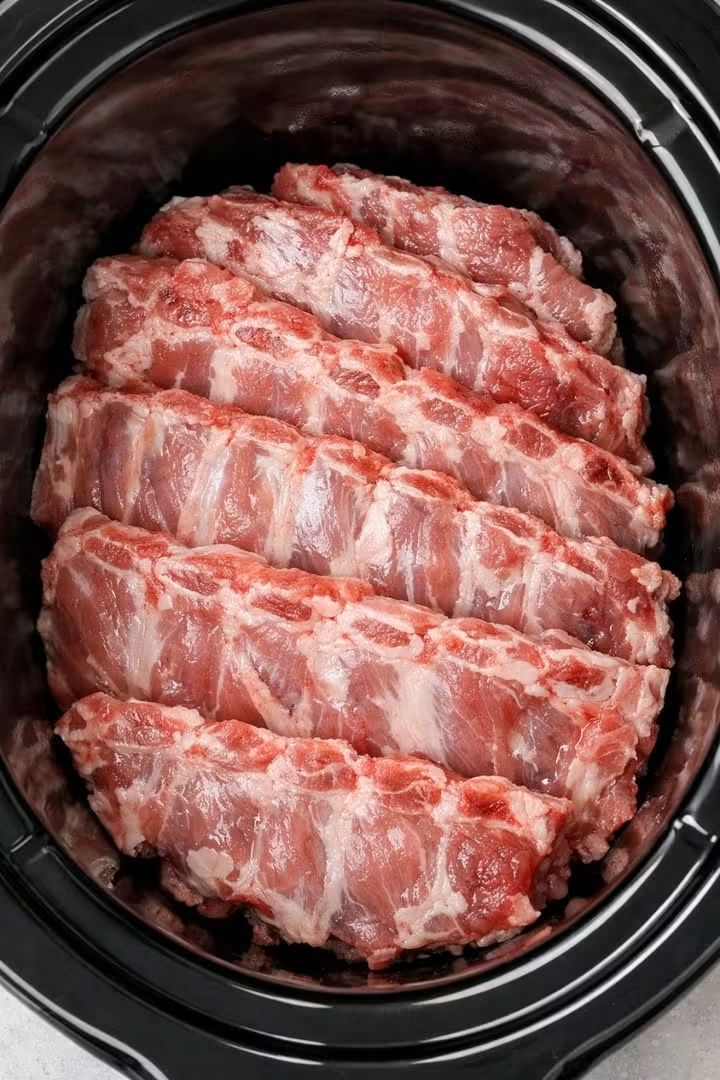
5-Ingredient Slow Cooker Tax Day Ribs
When April arrives and tax paperwork starts piling up on the kitchen table, the last thing anyone wants is a complicated dinner that requires hours of hands-on cooking. That is where these 5-Ingredient Slow Cooker Tax Day Ribs come to the rescue. With tender pork baby back ribs, a rich barbecue sauce, ketchup, brown sugar, and Worcestershire sauce, you can create a comforting family meal with very little preparation.
This easy slow cooker recipe is inspired by the practical spirit of old-fashioned Midwestern home cooking. It is the kind of meal that lets you take care of everyday responsibilities while dinner slowly cooks in the background. There is no need to brown the ribs first, prepare a complicated marinade, or stand over the stove. Simply arrange the ribs in the slow cooker, stir together the sauce ingredients, pour the mixture over the meat, and let the slow cooker do most of the work.
As the ribs cook, the sauce becomes rich and savory, with a pleasant balance of sweetness and tanginess. The pork gradually becomes tender, making the ribs easy to serve with classic comfort-food sides such as creamy mashed potatoes, buttered egg noodles, coleslaw, corn, or green beans.
Whether you call them Tax Day ribs, busy-weeknight ribs, or simply your family’s favorite slow cooker barbecue ribs, this recipe proves that a delicious dinner does not need a long ingredient list. Five everyday ingredients and a little patience are all you need to bring a satisfying meal to the table.
Why Are They Called Tax Day Ribs?
The name “Tax Day Ribs” is a playful reminder of how useful a slow cooker can be during one of the busiest times of the year. When paperwork, appointments, and household responsibilities compete for your attention, a simple dinner that cooks with minimal supervision can make the day feel much easier.
These ribs are not a traditional tax-season dish with a documented historical origin. Instead, the name celebrates the idea of preparing a comforting meal while taking care of life’s less enjoyable tasks. It is a fun, memorable name for an easy recipe that works just as well on an ordinary Tuesday as it does during a hectic April evening.
Recipe Overview
- Recipe Name: 5-Ingredient Slow Cooker Tax Day Ribs
- Preparation Time: 15 minutes
- Cooking Time on LOW: 7–8 hours
- Cooking Time on HIGH: 3½–4 hours
- Total Time: Approximately 7 hours 15 minutes to 8 hours 15 minutes on LOW
- Servings: 4
- Cooking Method: Slow cooking
- Cuisine Style: American comfort food
- Difficulty: Easy
- Main Ingredient: Pork baby back ribs
Ingredients for 5-Ingredient Slow Cooker Tax Day Ribs
This recipe uses five simple ingredients to create tender pork ribs coated in a sweet, tangy barbecue sauce. For the best results, choose fresh or fully thawed ribs and a barbecue sauce that you already enjoy eating.
1. Pork Baby Back Ribs
Quantity: 3–4 pounds
Baby back ribs are naturally meaty and work beautifully in the slow cooker. Their connective tissue gradually softens during the long cooking process, helping the meat become tender and flavorful. Remove the thin membrane from the bone side if desired, especially if you prefer a more tender eating experience.
2. Barbecue Sauce
Quantity: 1½ cups
Your favorite bottled barbecue sauce forms the base of the cooking sauce. Choose a smoky, sweet, spicy, or traditional variety depending on your family’s preferences. A thick sauce generally produces a richer coating, while a tangier sauce can balance the sweetness of the brown sugar.
3. Ketchup
Quantity: ½ cup
Ketchup adds tomato flavor, sweetness, and acidity. It also helps create a smooth, familiar barbecue-style sauce that clings nicely to the ribs after cooking.
4. Brown Sugar
Quantity: ¼ cup, packed
Brown sugar adds sweetness and a subtle molasses flavor. It balances the tanginess of the ketchup and Worcestershire sauce. You can reduce the amount if your barbecue sauce is already very sweet.
5. Worcestershire Sauce
Quantity: 2 tablespoons
Worcestershire sauce brings savory depth and a slightly tangy flavor to the mixture. It complements the pork and helps keep the finished barbecue sauce from tasting overly sweet.
Kitchen Equipment Needed
- One 5- to 7-quart slow cooker, or a model large enough to hold the ribs safely
- A medium mixing bowl
- A whisk or spoon
- A cutting board
- A sharp kitchen knife
- Kitchen tongs
- A wide spatula for lifting tender ribs
- A small saucepan, optional, for thickening the sauce
- A meat thermometer for checking food temperature
Step-by-Step Instructions
Step 1: Prepare the Pork Ribs
Remove the ribs from their packaging and place them on a clean cutting board. Pat the surface dry with paper towels if necessary.
Look at the bone side of the rack. If a thin, shiny membrane is present, you can remove it for a more pleasant texture. Slide a butter knife beneath one edge of the membrane, loosen it carefully, grip it with a paper towel, and pull it away from the bones.
Removing the membrane is optional, so do not worry if it proves difficult. The recipe will still work if you leave it in place.
Step 2: Cut the Rack into Sections
Use a sharp knife to cut the rack into sections containing approximately three or four ribs each. Smaller sections are easier to arrange in the slow cooker and simpler to lift out when the meat becomes tender.
Check that the sections fit comfortably inside your slow cooker without forcing the lid open. Keep the raw pork refrigerated until you are ready to begin cooking.
Step 3: Arrange the Ribs in the Slow Cooker
Place the rib sections directly into the slow cooker. Arrange them as evenly as possible, with the meaty sides facing down or toward the center when practical.
A little overlap is acceptable, but avoid packing the cooker so tightly that the lid cannot close properly. Make sure the amount of food is appropriate for your appliance and follow the manufacturer’s instructions for filling it.
There is no need to add water at this stage. The ribs will release moisture as they cook, and the barbecue sauce mixture will provide additional flavor and liquid.
Step 4: Prepare the Five-Ingredient Sauce
In a medium bowl, combine the barbecue sauce, ketchup, brown sugar, and Worcestershire sauce.
Stir thoroughly with a spoon or whisk until the mixture looks smooth and the brown sugar is evenly distributed. Taste a small amount of the uncooked sauce and adjust its flavor if desired, remembering that the final sauce will cook with the pork.
If you prefer a sweeter flavor, use a slightly sweeter barbecue sauce. If you enjoy a tangier result, choose a vinegar-forward barbecue sauce or make a small adjustment to the optional variations described below.
Step 5: Coat the Ribs with Sauce
Pour the sauce evenly over the rib sections. Use a spoon or tongs to help distribute the mixture between the pieces so that the ribs are coated as thoroughly as possible.
Spoon a little extra sauce over the exposed surfaces. The sauce does not need to cover the ribs completely because the meat will release moisture during cooking.
Step 6: Cook the Ribs Slowly
Place the lid securely on the slow cooker.
For LOW: Cook for approximately 7–8 hours.
For HIGH: Cook for approximately 3½–4 hours.
Cooking times can vary depending on the thickness of the ribs, the slow cooker model, and how tightly the ribs are arranged. The ribs are ready when the meat is very tender and begins to pull away from the bones easily.
For food safety, pork should reach at least 145°F (63°C) with a three-minute rest under standard whole-cut pork guidance. However, ribs cooked until they become fall-apart tender will usually reach a substantially higher temperature. Tenderness, rather than the minimum temperature alone, is important for this particular recipe.
Keep the lid closed as much as possible during cooking. Repeatedly opening the slow cooker allows heat to escape and may extend the cooking time.
Step 7: Check the Sauce and Tenderness
When the cooking time is nearly complete, carefully lift the lid and check the ribs. The meat should be tender enough to separate easily with a fork, but the sections may still hold together when lifted with a wide spatula.
If the ribs remain firm, continue cooking and check them again after a short interval. Avoid handling them too roughly because fully cooked ribs can break apart easily.
The sauce may be thinner than bottled barbecue sauce because the pork releases juices as it cooks. This is normal and can be corrected if you prefer a thicker coating.
Step 8: Thicken the Sauce if Desired
Using tongs and a wide spatula, carefully transfer the ribs to a serving platter. Skim excess fat from the cooking liquid if necessary.
Pour some of the cooking liquid into a small saucepan and bring it to a gentle simmer on the stovetop. Cook for approximately 5–10 minutes, stirring occasionally, until the sauce reduces to your preferred consistency.
Never put a ceramic slow cooker insert directly on a stovetop unless its manufacturer specifically states that it is safe for that use.
Step 9: Add the Finishing Sauce
Brush or spoon the warm sauce over the cooked ribs. If you reduced the sauce separately, use it to create a glossy coating just before serving.
For an optional caramelized finish, transfer the ribs to a foil-lined baking sheet, brush them with additional sauce, and place them under a preheated broiler for approximately 3–5 minutes. Watch them closely because barbecue sauce contains sugar and can burn quickly.
Step 10: Serve and Enjoy
Arrange the ribs on a warm platter and serve immediately. Place any remaining sauce in a separate serving bowl so everyone can add more to their plate.
Pair the ribs with mashed potatoes, egg noodles, coleslaw, green beans, corn, dinner rolls, or cornbread for a satisfying comfort-food meal.
Alternative Cooking Methods
Slow Cooker Method: The Easiest Option
The slow cooker is the recommended method because it requires minimal preparation and produces tender ribs with very little hands-on effort. Simply add the prepared ribs and sauce, cover, and cook until tender.
Slow Cooker with a Broiled Finish
If you prefer barbecue ribs with slightly caramelized edges, cook them in the slow cooker as directed. Then place them on a baking sheet, brush them with sauce, and broil briefly until the surface begins to bubble and darken in spots.
This extra step is optional, but it gives the ribs a finish that more closely resembles oven-finished barbecue ribs.
Oven Method
This is an alternative method rather than the original slow cooker preparation.
- Preheat the oven to 300°F (150°C).
- Cut the ribs into manageable sections and arrange them in a suitable baking dish.
- Mix the barbecue sauce, ketchup, brown sugar, and Worcestershire sauce.
- Pour the sauce over the ribs and cover the dish tightly with foil.
- Bake for approximately 2½–3½ hours, checking for tenderness as they cook.
- Remove the foil near the end if you want the sauce to thicken, or briefly broil the ribs after baking.
- Confirm that the ribs are fully cooked and tender before serving.
Oven cooking times vary depending on the size of the rack and the characteristics of your oven, so use tenderness as your final guide.
The History and Inspiration Behind Slow Cooker Ribs
Slow cooker ribs belong to a broad tradition of practical American home cooking. Across many households, cooks have relied on slow, moist cooking methods to turn less-tender cuts of meat into satisfying meals without requiring constant attention.
Electric slow cookers became increasingly popular in American homes during the twentieth century. Their convenience made them useful for busy families, working households, church gatherings, and potluck meals. Home cooks could prepare ingredients in the morning and return later to a hot meal that needed little last-minute work.
Barbecue ribs have their own diverse history, shaped by regional cooking traditions throughout the United States. Some preparations emphasize smoke and dry rubs, while others rely on tomato-based sauces, vinegar, sweetness, or spicy seasonings. This recipe uses a simple bottled-barbecue-sauce mixture inspired by familiar American home-style flavors.
The particular name “Tax Day Ribs” is a modern, playful recipe title rather than a documented historical dish. It reflects the practical idea of letting dinner cook while taking care of paperwork, errands, or other responsibilities.
Like many comfort-food recipes, the appeal lies in its simplicity: accessible ingredients, flexible serving options, and a cooking method that leaves more time for family and everyday life.
Benefits of This 5-Ingredient Recipe
1. Minimal Preparation
There is no need to sear the ribs or prepare a complicated marinade. Most of the preparation involves cutting the rack into sections and mixing the sauce.
2. Convenient Cooking
Once the ingredients are in the slow cooker, the appliance handles most of the work. This makes the recipe convenient for busy days when you want to avoid standing in the kitchen for long periods.
3. A Short Ingredient List
Five main ingredients keep shopping and preparation straightforward. Many households already have ketchup, brown sugar, and Worcestershire sauce in their kitchens.
4. Tender, Flavorful Meat
Slow cooking helps soften connective tissue in the ribs. The result can be tender meat with a rich, savory-sweet sauce.
5. Easy to Customize
You can change the flavor with different barbecue sauces or optional seasonings. A smoky sauce, a spicy sauce, or a tangier sauce can give the same basic recipe a different character.
6. Great for Family Meals
The recipe serves approximately four people and pairs well with many familiar side dishes. It is suitable for a relaxed family dinner, a weekend meal, or a casual gathering.
7. Flexible Side-Dish Options
Serve the ribs with vegetables, potatoes, salad, or bread according to your preferences. Adding vegetable-based sides can help create a more balanced meal.
8. Helpful for Meal Planning
Leftovers can be refrigerated and used in another meal within the recommended storage period. The meat can be removed from the bones and added to sandwiches or rice bowls, provided it is handled and reheated safely.
Serving Suggestions
These ribs are rich and saucy, so they pair particularly well with sides that provide contrast in texture and flavor.
- Creamy mashed potatoes: A classic choice for soaking up extra barbecue sauce.
- Buttered egg noodles: Mild, comforting, and easy to prepare while the ribs finish cooking.
- Coleslaw: Adds a refreshing crunch and balances the richness of the pork.
- Green beans: A simple vegetable side that complements the savory sauce.
- Corn on the cob: A sweet, familiar option for a relaxed family dinner.
- Warm dinner rolls: Ideal for enjoying every last bit of sauce.
- Cornbread: A hearty side that fits the traditional comfort-food theme.
- Garden salad: Adds freshness and color to the plate.
- Roasted vegetables: Carrots, broccoli, or Brussels sprouts offer a flavorful contrast.
- Baked potatoes: A filling option that works well with barbecue flavors.
For a traditional Midwestern-inspired dinner, serve the ribs with mashed potatoes, green beans, and warm dinner rolls. For a lighter plate, choose coleslaw and a generous green salad.
Recipe Variations and Flavor Ideas
Spicy Barbecue Ribs
Add 1–2 teaspoons of crushed red pepper flakes or a small amount of hot sauce to the sauce mixture. Start with less if you prefer mild heat, then adjust the next time you make the recipe.
Tangy Brown Sugar Ribs
Reduce the brown sugar to 2 tablespoons and add approximately 2 tablespoons of apple cider vinegar. This creates a more pronounced tangy flavor that balances the sweetness of the barbecue sauce.
Smoky Barbecue Ribs
Add 1 teaspoon of smoked paprika to the sauce. A small amount of chili powder can also contribute warmth and depth. These additions are optional and will increase the ingredient count beyond the original five.
Extra-Sweet Ribs
If your family enjoys a sweeter barbecue sauce, keep the original brown sugar amount and select a sweet-style bottled barbecue sauce. Avoid adding too much extra sugar because the sauce can become overly sweet as it reduces.
Less-Sweet Ribs
Use a tangy or vinegar-forward barbecue sauce and reduce the brown sugar to 1–2 tablespoons. Taste the sauce before cooking to make sure the flavor is balanced.
Thick, Sticky Barbecue Ribs
After the ribs finish cooking, transfer them to a platter and simmer some of the cooking liquid in a saucepan until it thickens. Brush the reduced sauce over the ribs and briefly broil them if desired.
Garlic Barbecue Ribs
Add 1 teaspoon of garlic powder to the sauce mixture for an extra savory note. This is an optional addition rather than part of the original five-ingredient recipe.
Tips for the Best Slow Cooker Tax Day Ribs
- Use fully thawed ribs: Start with refrigerated, thawed pork rather than frozen ribs.
- Remove the membrane if desired: This can improve the eating texture.
- Cut the rack into sections: Smaller sections are easier to arrange and serve.
- Choose a suitable slow cooker: Make sure the lid closes securely and the cooker is not overfilled.
- Keep the lid closed: Opening it repeatedly can increase cooking time.
- Check tenderness: The meat should pull away from the bones easily when ready.
- Handle carefully: Very tender ribs may break apart when lifted.
- Reduce the sauce separately: Use a saucepan if you want a thicker coating.
- Watch the broiler closely: Sugary barbecue sauce can burn in a short time.
- Adjust sweetness to taste: Different bottled barbecue sauces contain different amounts of sugar.
Food Safety Guidelines
Proper handling is important when preparing pork ribs in a slow cooker.
- Keep raw pork refrigerated until you are ready to prepare the recipe.
- Thaw frozen ribs in the refrigerator before slow cooking; do not put frozen ribs directly into the slow cooker.
- Wash your hands, utensils, and surfaces after handling raw pork.
- Use a clean cutting board and keep raw pork separate from ready-to-eat foods.
- Follow the manufacturer’s instructions for your slow cooker and use the LOW or HIGH cooking setting, not the KEEP WARM setting, to cook raw meat.
- Use a food thermometer when checking the meat. Whole cuts of pork should reach at least 145°F (63°C), followed by a three-minute rest, for standard food-safety guidance. For tender ribs, cooking usually continues well beyond this minimum.
- Refrigerate leftovers within two hours of cooking, using shallow containers to help them cool promptly.
- Refrigerate cooked leftovers for 3–4 days or freeze them for longer storage.
- Reheat leftovers to 165°F (74°C) for food safety.
Remember that the ribs’ tenderness is a separate consideration from the minimum safe internal temperature. Slow-cooked ribs are generally cooked longer so that connective tissue softens and the meat becomes tender.
How to Store Leftover Ribs
Refrigerator Storage
Allow the ribs to stop steaming heavily, then transfer them to shallow, airtight containers and refrigerate within two hours. Store the meat with some sauce to help prevent it from drying out. Properly refrigerated cooked pork leftovers should generally be used within 3–4 days.
Freezer Storage
For longer storage, place cooled ribs and sauce in freezer-safe containers or bags. Remove excess air, label the container with the date, and freeze. For best quality, use within approximately 2–3 months, although continuously frozen food can remain safe longer if stored properly.
Reheating in the Oven
Place the ribs in an oven-safe dish with a little sauce. Cover with foil and heat in a 300°F (150°C) oven until the center reaches 165°F (74°C). The time will depend on the portion size and whether the ribs are refrigerated or frozen.
Reheating in the Microwave
Place a serving in a microwave-safe dish with a spoonful of sauce. Cover loosely and heat in short intervals, turning or rearranging the pieces as needed. Check that the ribs reach 165°F (74°C) throughout before eating.
Using Leftover Rib Meat
Remove the meat from the bones and use it in barbecue sandwiches, baked potatoes, rice bowls, or wraps. Refrigerate leftovers promptly and reheat them thoroughly before serving.
Frequently Asked Questions
Can I use spare ribs instead of baby back ribs?
Yes. Spare ribs can be used, but they may be larger and have a different meat-to-bone ratio. You may need to cut them into smaller sections and allow additional cooking time. Check for tenderness before serving.
Do I need to brown the ribs before adding them to the slow cooker?
No. Browning is not necessary for this recipe. Adding the ribs directly to the slow cooker keeps preparation simple. A brief broiling step after cooking is an optional way to add some caramelization.
Can I cook the ribs on HIGH instead of LOW?
Yes. Cook them on HIGH for approximately 3½–4 hours, checking for tenderness near the end. The exact time depends on the thickness of the ribs and your appliance.
Why is my barbecue sauce thin?
The pork releases liquid as it cooks, which can thin the sauce. To thicken it, transfer some of the cooking liquid to a saucepan and simmer it until reduced.
Can I make the sauce less sweet?
Yes. Reduce the brown sugar to 2 tablespoons and choose a tangy barbecue sauce. You can also add a small amount of apple cider vinegar for more acidity.
Can I prepare the sauce ahead of time?
Yes. Mix the barbecue sauce, ketchup, brown sugar, and Worcestershire sauce in advance and refrigerate it in a covered container. Use it when you are ready to cook the ribs.
Can I put frozen ribs directly into the slow cooker?
No. For safer and more predictable cooking, thaw the ribs in the refrigerator before placing them in the slow cooker.
How do I know when the ribs are done?
The meat should be very tender and begin to pull away from the bones. Use a food thermometer for temperature guidance, but remember that ribs generally need additional cooking beyond the minimum safe temperature to develop their characteristic tenderness.
Can I make these ribs ahead of time?
Yes. Cook the ribs, refrigerate them promptly in shallow containers, and reheat them thoroughly before serving. Add a little sauce during reheating to help keep the meat moist.
What should I serve with Tax Day ribs?
Mashed potatoes, buttered egg noodles, coleslaw, green beans, corn, cornbread, and warm dinner rolls are all excellent choices.
Are these ribs gluten-free?
Not necessarily. Barbecue sauce and Worcestershire sauce can contain gluten or ingredients derived from gluten-containing sources, depending on the brand. Check every product’s label and choose versions specifically labeled gluten-free if needed.
Can I make this recipe low-carb?
You can reduce the brown sugar and choose a low-sugar or sugar-free barbecue sauce and ketchup. Check the nutrition labels carefully because these products can still contain carbohydrates. The modified recipe will taste different from the original version.
Nutrition Information
The nutritional content of this recipe depends on the amount of edible pork, the fat content of the ribs, the barbecue sauce brand, and how much sauce is consumed.
For a reliable estimate, calculate the nutrition using the exact ingredients and product labels you use. Divide the total by four servings. A typical serving provides protein from the pork, while the sauce contributes carbohydrates and sugars. The fat content can vary considerably depending on the ribs and how much visible fat is removed.
Important: The recipe’s five-ingredient count does not mean that the dish is low in sodium, sugar, or calories. Check the labels and adjust the ingredients to suit your dietary needs.
Recipe Card: 5-Ingredient Slow Cooker Tax Day Ribs
Ingredients
- 3–4 pounds pork baby back ribs, membrane removed if desired
- 1½ cups barbecue sauce
- ½ cup ketchup
- ¼ cup packed brown sugar
- 2 tablespoons Worcestershire sauce
Instructions
- Cut the ribs into sections of three or four ribs each.
- Arrange the ribs in a suitable slow cooker.
- Combine the barbecue sauce, ketchup, brown sugar, and Worcestershire sauce in a bowl.
- Pour the sauce mixture over the ribs, coating them evenly.
- Cover and cook on LOW for 7–8 hours or HIGH for 3½–4 hours, until tender.
- Carefully transfer the ribs to a serving platter.
- For thicker sauce, simmer some of the cooking liquid in a saucepan for 5–10 minutes.
- Brush the ribs with sauce and serve hot with your favorite sides.
Prep Time: 15 minutes
Cook Time: 7–8 hours on LOW or 3½–4 hours on HIGH
Servings: 4
Difficulty: Easy
Conclusion: An Easy Comfort-Food Dinner for Busy Days
These 5-Ingredient Slow Cooker Tax Day Ribs are a wonderful reminder that a satisfying family dinner does not have to involve complicated techniques or a long shopping list. With a rack of pork baby back ribs and four simple sauce ingredients, you can prepare a warm, flavorful meal while taking care of the rest of your day.
The slow cooker gradually tenderizes the meat while the barbecue sauce, ketchup, brown sugar, and Worcestershire sauce create a rich, savory-sweet coating. Serve the finished ribs with creamy mashed potatoes, crisp coleslaw, green beans, or warm cornbread for a meal that feels welcoming and familiar.
Although the name is inspired by the busy tax season, this recipe is useful throughout the year. It works for ordinary weeknight dinners, relaxed weekends, family gatherings, and casual meals with friends.
Keep this simple recipe in your collection for the days when you want dependable comfort food without spending hours in the kitchen. Prepare the ribs, mix the sauce, turn on the slow cooker, and let time do the work.
For Barbecue Rib Lovers
If you love tender meat, rich barbecue flavor, and recipes that require very little hands-on effort, these slow cooker ribs deserve a place in your regular meal rotation. Their simple ingredients make them approachable for beginner cooks, while the optional variations let experienced home cooks adjust the flavor to their liking.
Try the original sweet-and-savory version first, then experiment with a tangier sauce, a smoky seasoning, or a lightly caramelized finish under the broiler. Serve them with your favorite comfort-food sides and make the recipe your own.
Enjoy these easy Tax Day ribs, and share the recipe with anyone who appreciates simple, hearty, slow cooker meals!
SEO details
SEO Title: 5-Ingredient Slow Cooker Tax Day Ribs – Easy & Tender
Meta Description: Make tender slow cooker Tax Day ribs with just five ingredients. This easy barbecue pork recipe is perfect for busy weeknights and family dinners.
URL Slug: 5-ingredient-slow-cooker-tax-day-ribs
Focus Keyword: 5-Ingredient Slow Cooker Tax Day Ribs
Related Keywords: Easy slow cooker ribs, five-ingredient barbecue ribs, tender crockpot pork ribs, easy family dinner, slow cooker baby back ribs.